What it is
A skin peel uses an acid solution, chosen for your skin, to exfoliate in a controlled way and encourage fresher skin to the surface. Medical-grade peels go beyond what is sold on the high street, so they are selected and applied by a clinician after consultation.
Chemical peel and skin peel describe the same treatment, and you will see both names used locally. What varies is depth. Superficial peels work within the outer layers. They are the ones used most often here, usually as a course. Medium-depth peels reach further and need considerably more downtime and aftercare. Depth is set by the acid chosen, its strength, the pH of the solution and how long it stays on your skin. Two peels with the same ingredient can behave very differently, so a percentage on a label tells you little on its own.
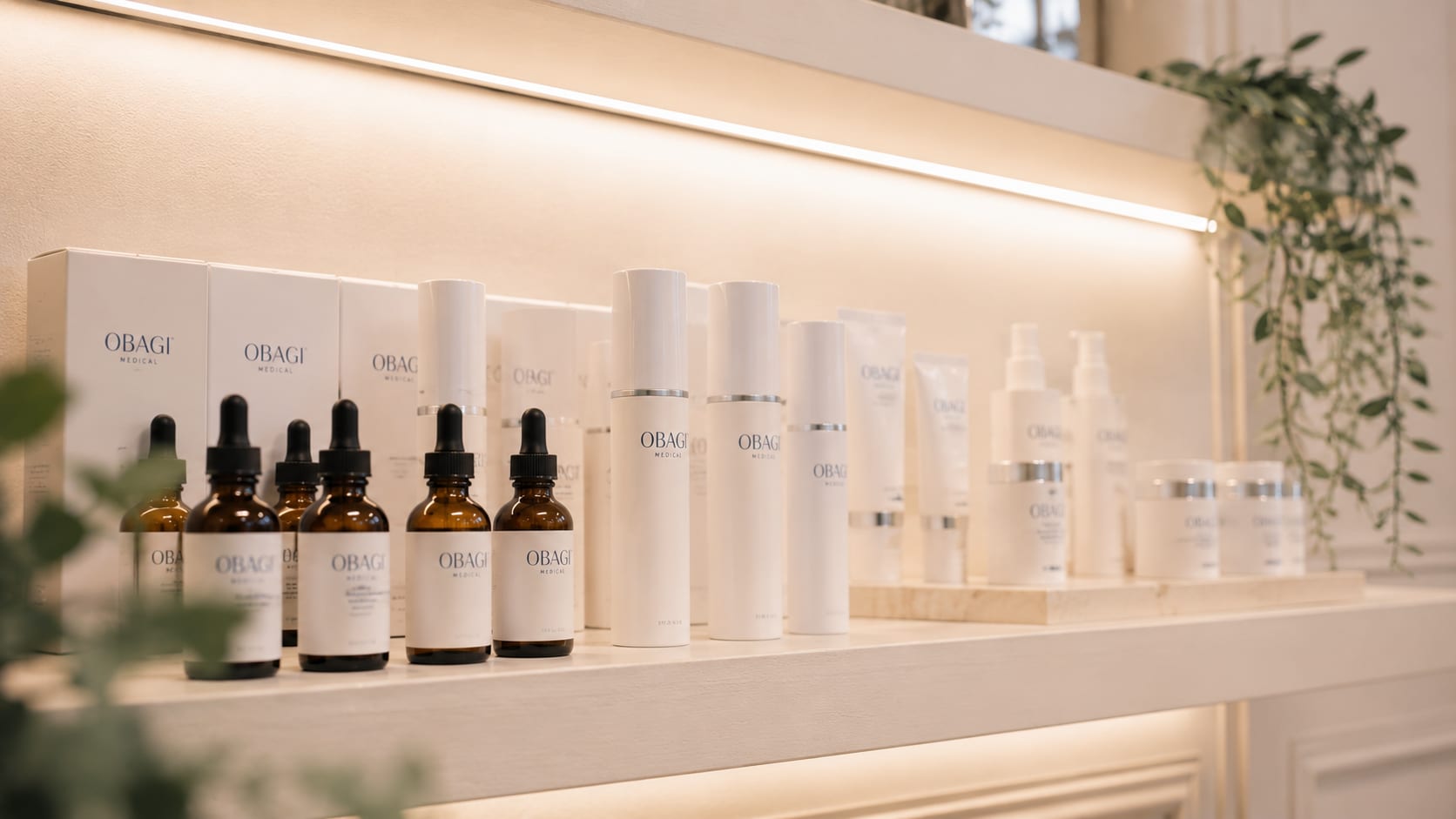
Two peels are in use at the clinic. The Fillmed Bright Peel is a gentle superficial peel chosen for dull, tired-looking or uneven-toned skin. The Obagi Blue Radiance Peel is a salicylic acid-based superficial peel suited to congested, oily or rough-textured skin and post-blemish marks. Which one, at what strength and how often is decided after your skin has been assessed, not from a menu.
What it may help with
- Dull, uneven or congested-looking skin
- Rough texture and enlarged-looking pores
- Some forms of pigmentation and post-blemish marks
- Acne-prone skin, as part of a broader plan
Who it may be suitable for
Most adult skin types, with the peel type, strength and course length tailored at consultation. Preparing the skin with suitable skincare is often recommended first, and for some skins the preparation does more of the work than the peel.
How readily your skin tans, burns or darkens after an injury matters as much as what you want treated. Richer skin tones often respond well to peels, but are more prone to post-inflammatory pigmentation if a peel is too strong or stepped up too quickly. For those skins the better approach is a gentler acid, preparation first and a longer course.
Who it may not be suitable for
Not suitable with active cold sores or skin infection, certain medications (including recent oral retinoids), or recent unprotected sun exposure. A history of keloid scarring, or of marking easily after an injury, usually changes which peel is sensible and at what strength rather than ruling treatment out. Some peels are unsuitable in pregnancy. A full screen forms part of the consultation.
What to expect
After cleansing, the peel is applied for a set time and then neutralised or left to work, depending on the product. You may feel warmth or tingling. Depending on depth, skin may look brighter the same day or flake lightly for a few days.
Appointments run 30 to 45 minutes. Most of that time is preparation, protecting the eyes and lips, and going through aftercare, not the peel itself. A course is often three to six sessions around four weeks apart, an interval that follows the skin's renewal cycle. Strength is stepped up between sessions only if your skin tolerated the last one well.
Consultation & safety
Peel selection is a clinical decision based on your skin type, history and goals. Patch testing and skin preparation are used where appropriate. A history of cold sores is discussed before anything is booked, because peels can trigger a recurrence.
Peels are available now at our Bedhampton clinic near Havant, which sees clients from Havant, Portsmouth, Waterlooville and Denmead. Our Winchester clinic at 9A Jewry Street offers them from 8 December 2026. A course started in Bedhampton can continue in Winchester.
Aftercare
Sun protection is essential after any peel. You will receive written aftercare covering cleansing, moisturising, SPF and which actives to pause, plus when to resume your usual routine.
Retinoids and exfoliating acids are usually paused for a few days either side of a peel. Avoid heat, saunas and vigorous exercise while the skin settles. Picking or pulling at flaking skin is the thing most likely to leave a mark.
Possible side effects & risks
Expected effects include temporary redness, tightness and flaking. Less common risks include prolonged redness, sensitivity, cold-sore reactivation and pigmentation change, all screened for and discussed at consultation. Results vary between individuals.
Skin peels in Winchester, from 8 December 2026
Our second clinic opens at 9A Jewry Street, in the historic centre of Winchester, on 8 December 2026, and skin peels run there from the opening diary. Jewry Street runs north from the top of the High Street, a couple of minutes' walk from the shops and roughly ten minutes on foot from Winchester railway station, with Tower Street car park close by. The Winchester clinic page covers the practicalities, and you can register your interest to be told first when the diary opens.
Chemical peels in Winchester are mostly sold by product name, and the names change from one clinic to the next. The more useful questions are who assesses your skin before the peel is chosen, and whether that person will still be there if your skin reacts. At Jewry Street a peel is only booked after an Advanced Nurse Practitioner and Independent Prescriber has looked at your skin, often with a skin analysis first, so the acid, the strength and the course length fit your skin rather than a price list. If the assessment concludes that a peel is not the right next step, you will be told that instead.
If you would rather not wait for 8 December, Winchester clients are being seen now at our Bedhampton clinic, roughly 35 minutes away via the M3 and A27. A course started there can continue at Jewry Street, with the same clinician and the same notes.
Chemical peels in Bedhampton, near Havant
The Bedhampton clinic is at 4 Masons Avenue, on the western edge of Havant: about five minutes by car from the town centre and one stop by train from Havant station. It is appointment-only, so there is no waiting room, and it sees clients for peels from Havant, Portsmouth, Waterlooville and Denmead. The Havant page covers travel and parking, and the Bedhampton clinic page covers the practicalities.
Peel or microneedling?
The two treatments are often discussed together and are easy to confuse, because both are described as resurfacing. A peel works from the surface down. It lifts the dull, retained outer layer and may even out tone, which is why it suits dull skin, congestion, surface roughness and some forms of pigmentation. Microneedling works from beneath, prompting the skin to lay down collagen under indented scarring and more established texture change, where a peel alone does little.
For many skins the plan uses both, at different stages and never in the same week. A course of peels may prepare and brighten the surface before microneedling addresses what sits beneath it, or the order may be reversed. Which is appropriate, and in what order, is decided at consultation, and results vary between individuals.
Frequently asked questions
Will my skin visibly peel?
Not always. Lighter peels often cause little or no visible flaking. Where a deeper peel is planned, we will tell you what to expect and help you time it around your diary.
How many sessions will I need?
It depends on your skin and your goal. Courses of three to six, roughly monthly, are common. Your plan is agreed at consultation and reviewed as you go.
Is a chemical peel the same as a skin peel?
Yes, the two names describe the same treatment. What differs from one peel to the next is the acid used, its strength and how deep it is taken. That is decided for your skin at consultation.
Do you offer skin peels in Winchester?
From 8 December 2026, yes, at our new clinic at 9A Jewry Street in the centre of Winchester. The peels, the prices and the clinician are the same as at Bedhampton: the peel is chosen after a nurse prescriber has assessed your skin, and a course is planned from there. Until the Winchester diary opens, Winchester clients are seen at our Bedhampton clinic near Havant, about 35 minutes away via the M3 and A27, and a course started there can continue at Jewry Street.
How much does a chemical peel cost?
A single Fillmed Bright Peel is from £45 and a single Obagi Blue Radiance Peel is from £75, and the prices are the same at Bedhampton and Winchester. Most people have a course, and the number of sessions, and therefore the overall cost, is agreed at consultation once we know which peel suits your skin. Results vary between individuals.
How much downtime does a chemical peel need?
For the superficial peels used here, usually very little. Skin may look slightly pink for a few hours and flake lightly for two or three days, and most people go straight back to work. Where a stronger peel is planned later in a course, we tell you what to expect beforehand so you can time it around your diary. Sun protection is needed every day afterwards whatever the depth.
Is a chemical peel or microneedling better for me?
They do different jobs. A peel works on the surface: dullness, uneven tone, congestion and surface roughness. Microneedling works deeper, prompting collagen beneath indented scars and more established texture. For many skins the plan uses both at different stages, and that is decided at consultation after your skin has been assessed.