Skin concern
Texture & Pores
Skin that feels rough or looks coarse under light is usually a turnover issue, and one of the more responsive concerns we see.
Texture is how your skin feels under your fingertips, and how light behaves when it lands on your face. Skin that renews evenly and holds water well reflects light in more or less one direction. Congested or dehydrated skin scatters it, so pores that were always there start to look like craters. Pore size is largely inherited. How visible your pores are is not, and that is the part worth working on.
The forms it takes, and why that matters
Rough texture and enlarged-looking pores have several causes. Congestion is the most common. Oil and dead cells build up inside the follicle, stretching its opening and leaving small closed bumps across the nose, chin and inner cheeks, which you can feel long before you can see them. Slowed turnover is the second. Dead cells sit on the surface longer than they should, so the skin feels dry, grainy and faintly rough however much moisturiser you use. Laxity is the third. As the skin's support structure thins with age, the follicle wall is no longer held taut, so pores elongate into a teardrop shape and show more down the cheeks than across the nose. Some of what people call texture is shallow scarring left by past breakouts. These forms can look similar but need different treatment.
What tends to make it worse
Most rough-textured skin we see has been over-exfoliated: grainy scrubs, cleansing brushes, acids layered under a retinoid, and pore strips that clear the surface for an evening and inflame the follicle for a fortnight. Stripping the barrier prompts the skin to produce more oil and shed more unevenly. Squeezing is the other reliable aggravator, because a follicle wall stretched hard enough does not spring back.
Other contributors include heavy or occlusive make-up left on overnight, friction from masks, straps and phones, very hot water, and dehydration from central heating and air conditioning. Cumulative sun exposure breaks down the collagen that holds each pore taut, which is why pores so often become more visible in the forties than in the twenties. Most people notice it first in overhead bathroom light or a phone's front camera, both of which show texture more harshly than daylight.
The realistic pathways, and what each is not good for
Medical-grade skincare is the foundation of nearly every texture plan, and for a fair number of people it is the whole plan. It works on the causes: the oil, the uneven shedding and the barrier. It does this every day, which no clinic treatment can. It will not show visible change inside a fortnight.
Skin peels lift a congested, retained surface layer and may smooth roughness and refine the look of pores over a planned course, often three to six sessions spaced roughly monthly. They suit congestion and slowed turnover. They do little for pores made visible by laxity, and they are the wrong choice on a barrier that is already irritated.
Microneedling works below the surface, encouraging collagen in the tissue that supports the pore wall. That makes it the more suitable option where laxity or textural scarring is the cause. It builds over weeks, not on the day, and it is not appropriate over active breakouts. Where dehydration is the main factor, injectable skin boosters address water content from within, which no amount of resurfacing can do.
None of these removes pores, because pores are functional structures your skin needs. If your skin is healthy and you are comparing it with an edited photograph, we will tell you so at consultation and will not recommend a course.
What a consultation looks at
A texture consultation is mostly looking and asking. Your practitioner checks where the roughness sits and whether it is raised or depressed. They ask about your routine, how often you exfoliate and with what, and whether you have a history of breakouts. Skin tone matters too: deeper tones mark more readily after injury, so resurfacing is approached with more caution. Our AI Skin Analysis picks up what a mirror misses, and congestion under an apparently clear surface is one of the more common things it finds. Consultations run at our Bedhampton clinic near Havant, serving Havant, Portsmouth, Waterlooville and Denmead, and at our Winchester clinic on Jewry Street from 8 December 2026.
When it belongs with your GP instead
Some rough skin is not a texture concern. A single scaly, crusted or rough patch that will not heal, particularly on the nose, forehead, ears or the backs of the hands, should be looked at by your GP, not treated here. Widespread painful lumps under the skin, deep cystic acne, and texture change that has come on suddenly alongside other symptoms all belong with a doctor first. Persistent rough, itchy patches are more likely to be eczema or keratosis pilaris than congestion, and both need managing, not resurfacing. We do not treat these, and resurfacing would only delay a diagnosis.
Frequently asked questions
Can you make my pores smaller?
Not permanently. Pore size is largely inherited, but how visible a pore is depends on what is sitting inside it and how well the skin around it is supported, and both of those can be worked on. Refinement is a realistic goal.
How do I know whether it is congestion or scarring?
Congestion tends to feel bumpy, sits raised or level with the surface, and moves and changes over weeks. Textural scarring is a depression you can feel. It stays in the same place month after month, and there is usually a history of breakouts behind it. The two can look alike in a bathroom mirror and need different treatment, so your practitioner assesses them in good light at consultation.
Will exfoliating more often help?
Usually not. Over-exfoliation is one of the most common causes of the rough texture we see. A stripped barrier produces more oil and sheds more unevenly: the same problems you were trying to fix. More acid, more often, on skin that is already irritated tends to make the surface rougher, not smoother.
How long before texture improves?
Surface roughness can lift within days of a peel. A change in how the skin renews takes roughly six to twelve weeks of consistent skincare, and collagen-led change from a course of microneedling builds over several months. Results vary between individuals, so we set your timescale at consultation.
Possible pathways
Treatments often discussed for texture & pores
Suitability is always assessed at consultation. These are options to discuss, not recommendations.

Consultations & Reviews
AI Skin Analysis
Clinical imaging that shows what is happening beneath your skin's surface, so your plan starts from evidence. Normally £50. Free until 8 December 2026 at our Bedhampton clinic, and free at our new Winchester clinic for anyone who books before it opens on 8 December.

Skin Boosters & Regenerative
SkinVive by Juvederm
A microdroplet hyaluronic acid treatment placed just beneath the surface to support skin hydration and smoothness, without adding volume or changing your features.
Skin Boosters & Regenerative
Exosome Regenerative Therapy
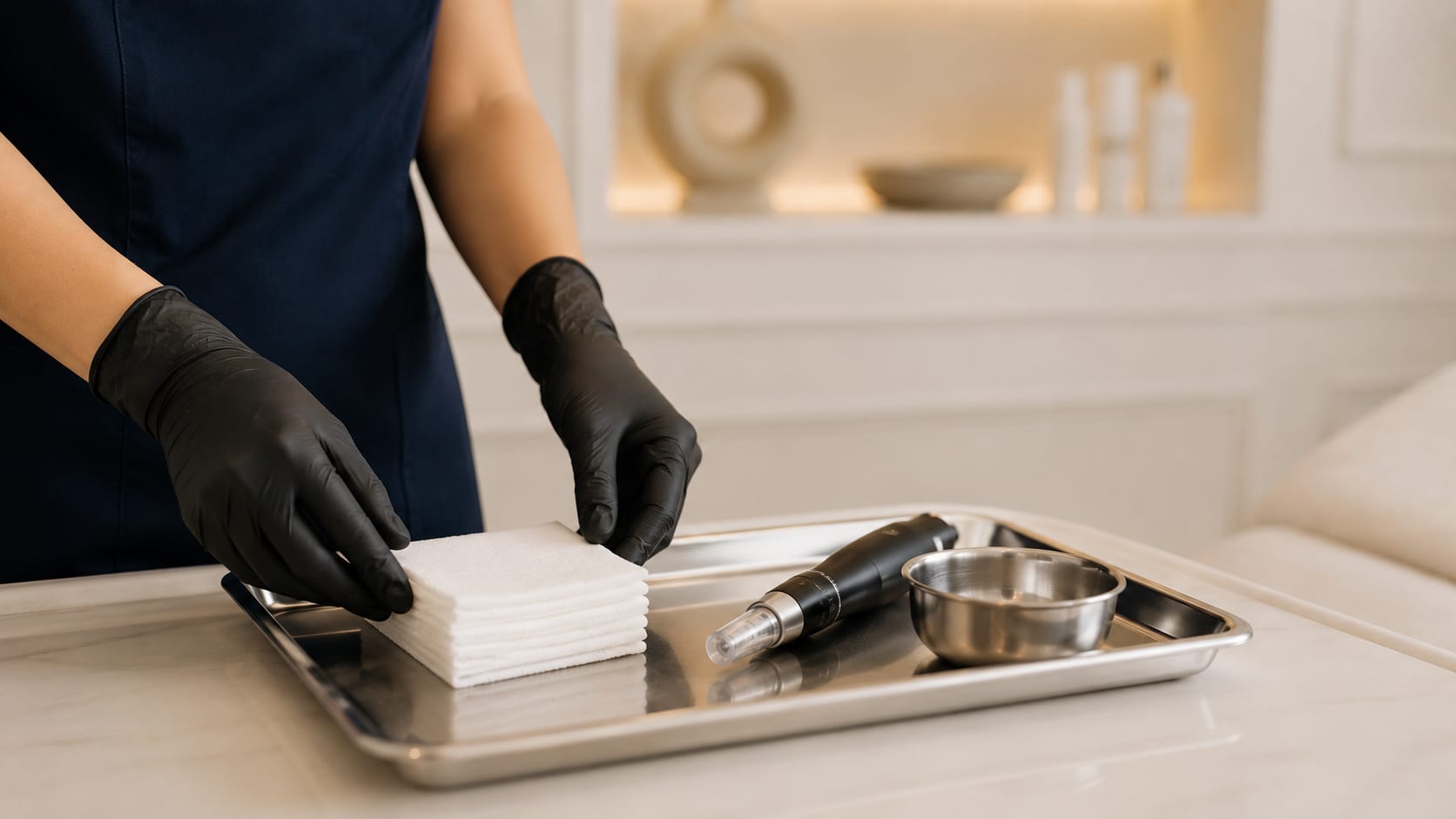
A regenerative treatment applied with microneedling, intended to support the skin's own repair processes after controlled stimulation. Always assessed and planned at consultation.
Skin Health Treatments
Skin Peels
Medical-grade resurfacing treatments selected for your skin, supporting brightness, smoother texture and clearer-looking skin over a planned course.
Skin Health Treatments
Microneedling
Controlled micro-injury that prompts the skin's own renewal, a well-established option for texture, some scarring and overall skin quality.
Consultation-led care
Start with a conversation about your skin
Every treatment starts with a consultation. We assess your skin, go through your options and tell you what is realistic for you. There is no obligation to proceed.