Skin concern
Scarring
Scars are the skin's repair work made permanent. Some types can be softened, and knowing which type you have comes first.
A scar is the skin's repair work made permanent. Any injury that reaches past the surface layer can scar: a deep spot, a graze, a surgical wound, a chickenpox lesion. The skin closes the gap with collagen laid down quickly rather than neatly, and what is left never quite matches the tissue around it. Most skin concerns are processes that treatment can interrupt. A scar is a structure that has to be remodelled, and remodelling is slow.
Types of scarring, and why the type decides the pathway
Scarring, particularly after acne, comes in distinct types. Ice-pick scars are narrow and deep, like a small puncture, and reach further down than most resurfacing can. Boxcar scars are wider, with defined, almost vertical edges and a visible rim. Rolling scars are shallower, with soft, undulating edges. They show as a generally uneven surface, not individual marks, and are most obvious under side lighting. Raised scars are the opposite problem: too much collagen, not too little. They divide into hypertrophic scars, which stay within the original wound, and keloid scars, which spread beyond it.
Some marks are not scarring at all. Flat red, brown or purple patches left where a spot has healed, with no change in the surface you can feel, are post-inflammatory colour change. They belong with pigmentation, and most fade on their own over months. Most people worried about acne scars have some of both. Treating colour change as though it were texture can waste a year.
What tends to make it worse
Picking is the big one. Squeezing a spot that would have faded in a fortnight is the most reliable way to turn it into a mark lasting months, or a depression that does not fade at all. Scarring also tracks how deep the inflammation went and how long it lasted. Deep nodular breakouts leave the most behind, and treating active acne is itself scar prevention.
Unprotected sun is the other aggravator. UV darkens the discolouration around a healing scar, making it far more noticeable than the texture alone would be, and the effect is stronger in deeper skin tones. Time helps. A scar keeps remodelling for a year or more, so judging it, or treating it aggressively, at three months is premature.
What a consultation looks at
Lighting matters as much as the skin. Flat overhead light hides textural scarring almost completely, so side lighting and photographs from a fixed angle show far more than a bathroom mirror. Your practitioner will also run a finger across the area, because texture is felt more reliably than it is seen.
The rest is your history: what caused the scarring and how long ago, whether the acne behind it has settled, how you have healed before, whether anyone in your family forms keloids, your skin tone and its tendency to pigment after injury, and what you have already tried. If acne-prone skin is still flaring, calming it comes first and the scar work waits, because fresh breakouts would undo it.
The pathways, and what each is and is not good for
Microneedling is the usual starting point for rolling and shallower boxcar scarring. Controlled micro-injury prompts the skin to lay down collagen beneath a depression, which may gradually lift it. It is a course of sessions spaced weeks apart. Skin peels act more on the surface, so they suit the colour side and shallow irregularity, not defined depressions. Polynucleotides are a repair-led route sometimes discussed for skin quality around a scarred area. Medical-grade skincare and daily sun protection sit underneath all of it, and where the concern is colour change alone they are often the whole plan.
Ice-pick and deep boxcar scars are where our treatments reach their limit. Needling across the surface does little to a scar that runs narrow and deep, and treating those scars needs techniques we do not offer. If that is what you have, we will tell you at consultation and point you towards options that might reach it. Progress with true scarring is measured in degrees of improvement over months, and results vary between individuals.
When it belongs with your GP
Some scarring is a medical matter first. Keloid scars that keep growing, spread beyond the original injury or become itchy and painful need a GP or dermatology opinion, because the treatments that keep them in check are prescription or procedural. Scarring from surgery, burns or significant trauma belongs in the same category while it is still red, raised and remodelling. Acne that is still active, deep or cystic needs medical treatment before anything cosmetic is sensible. Any mark that changes shape or colour, bleeds or will not heal is not a scar question at all, and needs a doctor promptly.
We assess scarring at our Bedhampton clinic, serving Havant, Portsmouth, Waterlooville and Denmead, and from 8 December 2026 at our new clinic on Jewry Street in Winchester. At either clinic, the first appointment establishes which type of scarring you have and what treatment may change.
Frequently asked questions
How do I know whether I have scarring or just marks?
Close your eyes and run a fingertip slowly over the area. Scarring changes the surface itself: a dip or a raised patch you can feel. Post-blemish marks are flat, with colour but no texture. The two have different timescales: flat marks usually fade over months with sun protection and the right actives, while true scarring needs remodelling and will not fade on its own.
Can acne scarring be got rid of completely?
No. Scarring is permanent tissue change, and the realistic goal is to soften it so that it catches the light less and looks like an uneven surface, not distinct marks. Improvement builds over a course and over months, not sessions. How much you get depends on the scar type, your skin and how it heals. Results vary between individuals.
How long should I wait after my acne settles before treating the scarring?
Usually several months, sometimes longer. Scar tissue keeps remodelling for a year or more after it forms, so a scar judged at three months often looks better at nine with no treatment at all. More importantly, resurfacing skin that is still breaking out risks spreading inflammation and creating fresh marks, so the acne needs to have settled first.
Does microneedling work on every type of acne scar?
No, and this is where scar type matters most. It tends to do well with rolling scars and shallower boxcar scars, where prompting collagen underneath can gradually lift a depression. It does far less for narrow, deep ice-pick scars, because the treatment works across the surface and those run well below it. Your practitioner will tell you which type you have before any course is planned.
Possible pathways
Treatments often discussed for scarring
Suitability is always assessed at consultation. These are options to discuss, not recommendations.

Skin Boosters & Regenerative
Polynucleotides
A regenerative injectable therapy that supports the skin's own repair processes, often discussed for the under-eye area, skin quality and early ageing.
Skin Boosters & Regenerative
Exosome Regenerative Therapy
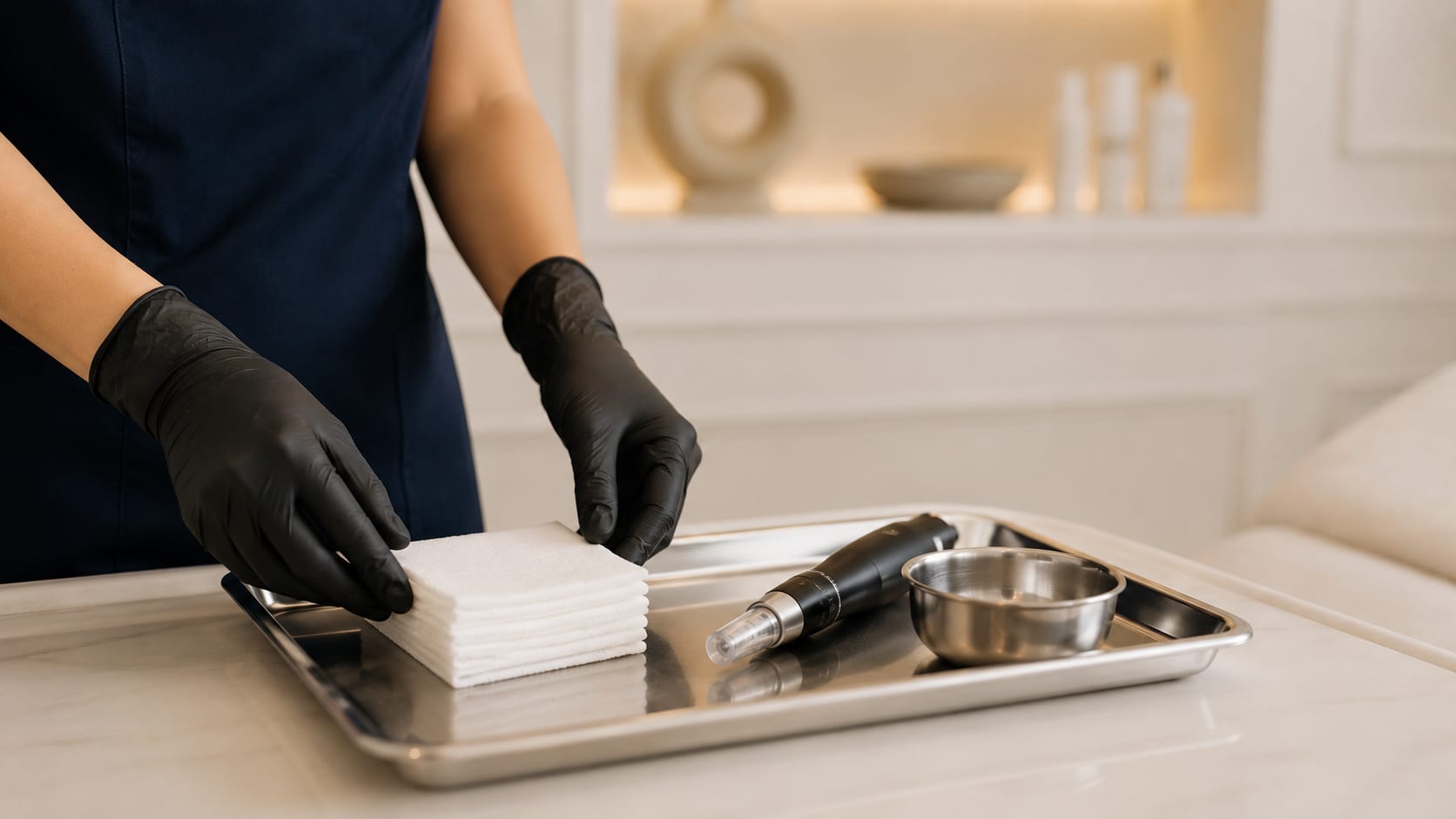
A regenerative treatment applied with microneedling, intended to support the skin's own repair processes after controlled stimulation. Always assessed and planned at consultation.
Skin Health Treatments
Microneedling
Controlled micro-injury that prompts the skin's own renewal, a well-established option for texture, some scarring and overall skin quality.
Consultation-led care
Start with a conversation about your skin
Every treatment starts with a consultation. We assess your skin, go through your options and tell you what is realistic for you. There is no obligation to proceed.