Skin concern
Volume Loss
With age, the deep fat pads and bone support of the face change. Done well, restoring volume uses small amounts of product, placed conservatively.
Volume loss is a change in the structure beneath the skin, not in the skin itself. The deep and superficial fat pads of the face shrink and slide downwards, and the ligaments holding them in place loosen. The bone also remodels around the eye socket, the cheekbone and the jaw. Even with the same skin, the face begins to cast different shadows, which is why volume loss often looks like tiredness more than ageing.
The forms it takes
Midface flattening is the most common form, and the hardest for people to describe. The cheek that used to sit high and full settles lower and slightly inward. This flattens the front of the face, lengthens the distance between the lower lid and the cheek, and creates the shadow running from the inner eye down towards the nose. With less support above it, the fold from the nose to the corner of the mouth deepens, even though the skin there has not changed.
Temple hollowing is less obvious. It usually shows first in photographs taken side-on or under hard overhead light, where the area between the brow and the hairline looks like a dip instead of a gentle curve. Along the jaw, loss of bone support and descent of the fat pads soften a line that was once clearly defined. A small hollow just in front of the jowl makes a visual difference out of proportion to its size. The under-eye is complicated enough to be assessed separately: see under-eye concerns.
Why identification comes first
Three different things make a face look deflated, and only one of them is volume. The first is real loss of fat and bone beneath the skin. The second is skin laxity, where the collagen and elastin support weakens, so tissue descends instead of disappearing. The third is skin quality: thin, dry, crepey skin reflects light poorly and looks gaunt whatever sits under it. Most faces past forty have some of all three, in proportions that differ from person to person.
Filling tissue that has descended rather than shrunk adds weight where the face was already heavy. This is the mechanism behind most overdone faces.
What makes it more noticeable
Years of ultraviolet exposure degrade the collagen and elastin that hold everything in place. Significant or repeated weight loss shows in the face before anywhere else, and rapid loss on the newer weight-management medicines has become a common reason people come in. Smoking, the fall in oestrogen around the menopause, dental change, genetics and a naturally low body fat percentage all play a part. Poor sleep and dehydration do not cause volume loss, but they make it more visible on any given morning.
The realistic pathways, and what each is not for
Where support has been lost, the conversation is usually about dermal fillers. They are placed conservatively over staged sessions, at the level where the loss sits, instead of chasing the line or shadow it produces. Where the face looks deflated overall rather than hollow in one place, and you would prefer gradual change, a collagen-stimulating approach such as Sculptra may be discussed with our prescriber. It builds over several months and adds nothing on the day. Where the issue is skin quality, treatments aimed at hydration and skin renewal may help the surface reflect light better, but they do not replace lost support.
None of these treatments lifts. Beyond a certain point, the options for descended tissue are surgical, and adding volume to create a lift tends to make the face heavier.
What a consultation looks at
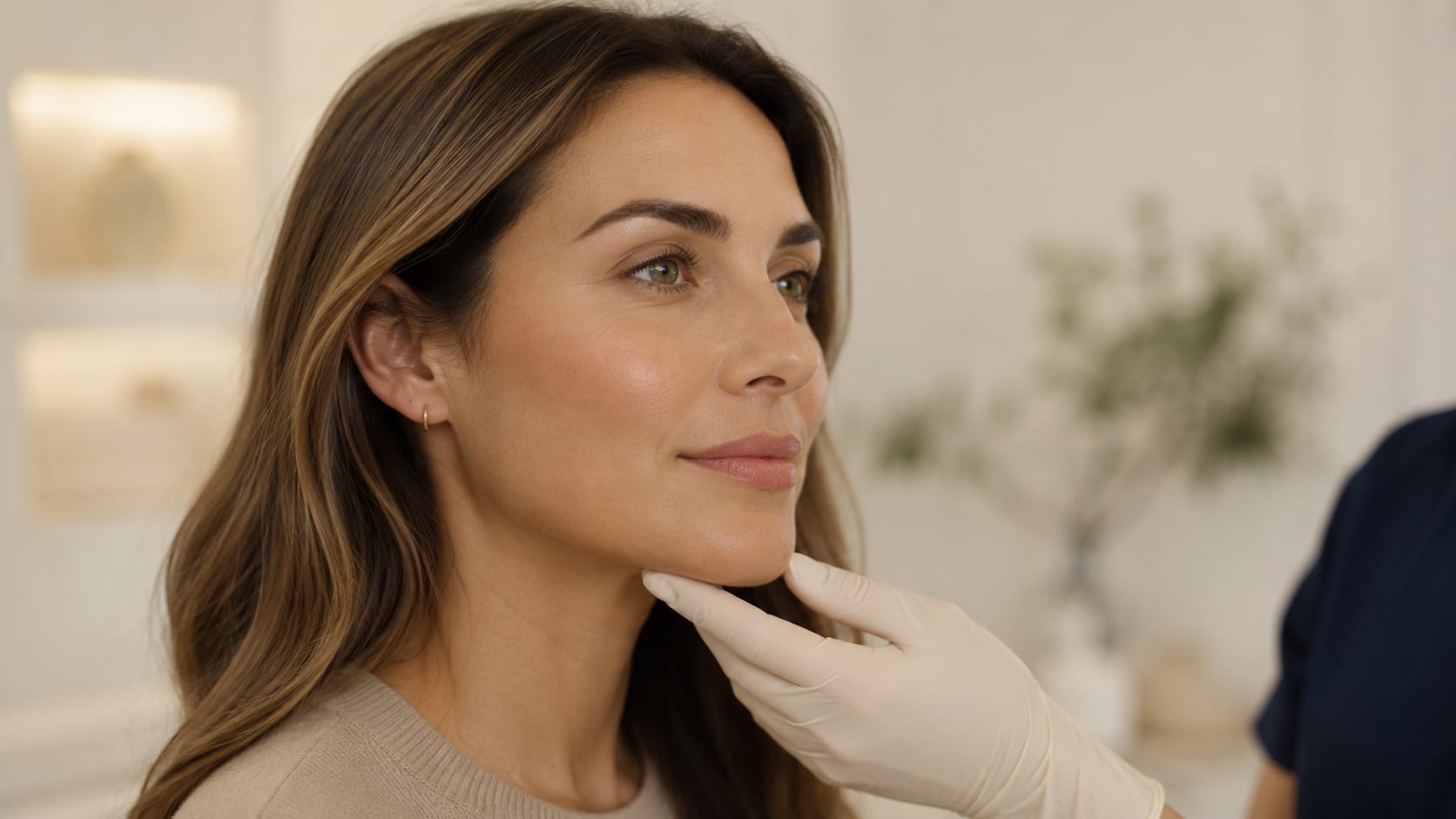
Your practitioner assesses your face in good light, from the front and in profile, at rest and in movement. Shadow changes with the angle, and a hollow that is obvious under a downlight can vanish beside a window. You will be asked about your weight history, medication, any autoimmune or clotting conditions, and any previous treatment and what was used. You will also be asked what prompted you to come in, because wanting to look less tired and wanting your cheekbones back lead to different plans.
Proportion across the whole face matters more than the one area you have been looking at, so a sensible plan is staged, with a review point built in. Sometimes the change that can be achieved safely is smaller than the one you hoped for. If so, we will tell you at the consultation, not halfway through a course.
When it belongs with your GP
Volume change that develops over weeks rather than years should be checked by a doctor before anything cosmetic is planned. See your GP first about unintentional weight loss, wasting on one side of the face only, new asymmetry, hollowing that develops alongside fatigue or other symptoms, or facial change while on long-term steroid or antiretroviral treatment.
Assessment happens at a skin consultation at our Bedhampton clinic near Havant, and at our Winchester clinic on Jewry Street when it opens on 8 December 2026. Results vary between individuals, and what is realistic for your face is agreed at that appointment.
Frequently asked questions
How do I tell whether I need volume or whether things have simply dropped?
Lie flat and look at your face in a hand mirror. Whatever improves once gravity is taken out of it has descended, not disappeared. Whatever still looks hollow is closer to true volume loss. Most faces show a mixture of the two, and your practitioner assesses the proportion at consultation, because the two are treated differently.
Will restoring volume make me look overfilled?
Overfilling usually comes from treating the shadow instead of the cause, or from adding volume to tissue that had descended, not shrunk. A conservative plan works at the level where the loss sits, spreads the work across more than one appointment, and reviews it in between. Results vary between individuals. The aim discussed at consultation is your own face looking rested, not a different face.
How long does it last?
It depends on the approach, the area and your metabolism, so nobody can give you a precise figure in advance. Volume placed in a part of the face that moves a lot tends not to last as long as volume placed against firmer support. Your practitioner will give you a realistic range for the plan you agree, with a review point built in instead of an assumed top-up date.
I have lost a lot of weight recently. Should I wait before doing anything?
Usually yes, at least until your weight has been stable for a few months. The face shows weight change early and keeps changing for a while after the scales settle, so treating during that time means planning around a face that is still shifting. Tell your practitioner about any weight-management medication you take, because it affects the timing of a sensible plan.
Possible pathways
Treatments often discussed for volume loss
Suitability is always assessed at consultation. These are options to discuss, not recommendations.
Injectable Treatments
Dermal Fillers
Lip fillers and facial volume restoration with premium Juvederm hyaluronic acid, always after a consultation and always placed conservatively.

Skin Boosters & Regenerative
Sculptra
A collagen-stimulating injectable that prompts your own skin to rebuild structure over several months. It does not add volume on the day.
Consultation-led care
Start with a conversation about your skin
Every treatment starts with a consultation. We assess your skin, go through your options and tell you what is realistic for you. There is no obligation to proceed.